
Vadzo Imaging Positions Falcon-821CRS as a 4K High Resolution HDR Bedside Diagnostic Camera in a Compact 38mm Form Factor for Portable Clinical Imaging
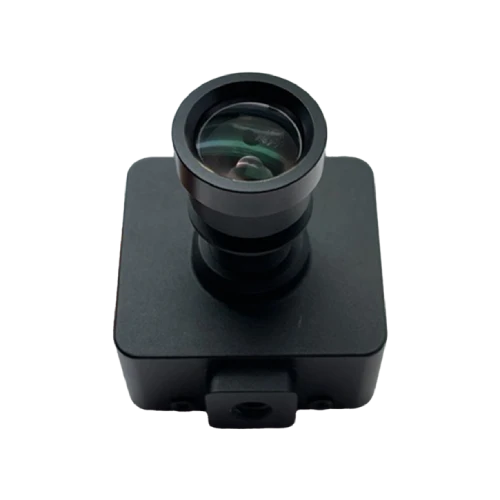 The Falcon-821CRS is an 8MP color rolling shutter high resolution USB camera built on the Onsemi AR0821 HyperLux sensor. Positioned as a bedside diagnostic camera for clinical and portable imaging environments, it delivers 4K HDR output, auto exposure, and full UVC compliance in a compact 38mm module. The camera supports bedside patient assessment, point of care imaging, telemedicine, clinical examination, and hospital imaging applications without requiring driver installation on Windows, Linux, or Android.
FORT WORTH, TX / ACCESS Newswire / June 26, 2026 / Vadzo Imaging, a provider of embedded vision camera products, today positions the Falcon-821CRS as an AR0821 Compact USB Camera purpose-built for portable clinical imaging. The Falcon-821CRS functions as a Bedside Diagnostic Camera delivering 8MP 4K HDR output from the Onsemi AR0821 HyperLux sensor in a compact 38mm module with USB 3.0 connectivity and full UVC compliance. With no proprietary drivers required and bus power over USB, the camera connects directly to any clinical laptop, tablet, or embedded platform. Vadzo built this 4K Bedside USB Camera to address the persistent challenge of deploying high-resolution, high dynamic range imaging at patient bedsides without the cable complexity, driver dependencies, or physical bulk that traditional medical cameras impose.
Sensor and Camera Overview
The Falcon-821CRS is an AR0821 Diagnostic Camera built on the Onsemi AR0821 HyperLux CMOS sensor and coupled with a high-performance ISP. The AR0821 is an 8MP (3848 x 2168) color rolling shutter sensor with a 1/1.7-inch optical format and 2.1 µm pixel size. The sensor integrates on-chip LI-HDR capable of up to 120 dB dynamic range, capturing tissue color gradients, vascular surface detail, and skin tone differentiation accurately under variable clinical lighting. This combination of 4K spatial resolution and high dynamic range makes this 4K Medical USB Camera well-suited for bedside documentation workflows where lighting conditions change between room ambience, examination lamps, and backlit display screens.
The Falcon-821CRS is a Compact HDR USB Camera built into a 38mm module housing the Onsemi AR0821 sensor, ISP, S-Mount (M12) fixed focus lens assembly, and USB 3.0 interface. As an 8MP Compact USB Camera, the camera draws power entirely from the USB host port at 5V, eliminating external power supplies near patient beds. Auto exposure and on-chip LI-HDR ensure consistent image quality without manual tuning. Output modes include 4K, 1080p, 720p, and VGA. The camera enumerates as a standard UVC device and has been validated on Windows, Linux, and Android platforms.
Key specs: 8MP (3848 x 2168) | Onsemi AR0821 HyperLux 1/1.7-inch 2.1 µm pixel | Color | Rolling Shutter | Fixed Focus | Auto Exposure and LI-HDR | USB 3.0 (USB 3.2 Gen1) | UVC Compliant | 4K / 1080p / 720p / VGA | S-Mount (M12) | Windows / Linux / Android | 38mm Compact Module
Key Capabilities of the Onsemi AR0821 4K High Resolution HDR Bedside Diagnostic Camera
4K HDR for Precise Clinical Documentation: Standard 1080p cameras miss subtle vascular patterns, wound bed texture, and skin tone gradients that carry diagnostic significance. The Onsemi AR0821 sensor captures 8MP (3848 x 2168) native resolution with on-chip LI-HDR producing up to 120 dB dynamic range. This delivers a High Resolution Medical Camera output that preserves fine tissue detail under specular reflections, examination lamp highlights, and ambient room light simultaneously. The 2.1 µm pixel size and low noise architecture ensure clean color reproduction across the full tonal range. System integrators building this Portable 4K HDR Camera into clinical documentation tools benefit directly from the sensor's ability to capture subtle wound stage transitions and ophthalmic surface features at true 4K without post-processing artifacts.
UVC Compliance for Zero Driver Deployment in Clinical Environments: Hospital IT departments and clinical operations teams apply strict software controls that prevent unauthorized driver installation on networked medical devices. A camera requiring custom drivers triggers lengthy approval cycles and creates ongoing maintenance overhead. The Falcon-821CRS high resolution camera is a Zero Driver Medical Camera that enumerates natively via USB Video Class on Windows 10 and 11, Linux through V4L2, and Android without any third-party driver package. As a UVC Bedside Camera, it becomes active immediately on connection, eliminating IT approval barriers and allowing clinical staff to deploy or replace the module without involving software teams.
Compact 38mm Form Factor for Space Constrained Medical Integration: Bedside imaging tools, handheld diagnostic probes, and portable examination devices impose strict physical constraints. Traditional USB cameras with large housings and external power bricks cannot integrate into dermatoscope attachments, compact fundus imaging handles, or tablet-mounted examination frames. The Falcon-821CRS operates as a 38mm USB Camera Module that packages the complete AR0821 sensor, ISP, S-Mount lens assembly, and USB 3.0 interface into a 38mm body. This makes it a Compact USB Medical Camera that OEM teams can embed directly into handheld clinical devices, portable wound assessment tools, and bedside carts. The S-Mount (M12) lens holder adds optical flexibility without changing the module footprint, enabling this 4K Portable Camera Module to serve multiple specialties from a single hardware platform.
Automatic Exposure Control Under Variable Examination Lighting: Clinical environments present rapidly changing illumination. Overhead fluorescents, battery-powered examination lights, window daylight, and backlit bedside displays create inconsistent illumination conditions across a single patient encounter. Manual exposure adjustment introduces delays and produces operator-dependent image quality variation. The Falcon-821CRS on-chip auto exposure continuously adjusts gain and shutter speed in response to ambient light changes, maintaining consistent image brightness without clinician intervention. As a Portable Diagnostic Camera, the Falcon-821CRS delivers reliable exposure across room transitions, from dimly lit overnight wards to well-lit examination rooms. The HDR layer captures detail in both highlight and shadow regions within the same frame, making this Clinical Examination Camera output reliable for wound assessment, skin inspection, and general patient documentation regardless of lighting setup.
S-Mount Lens Interchangeability for Clinical Specialty Applications: Different clinical specialties require different optical configurations. Dermatology requires short working distances and high magnification for lesion capture. Telemedicine and bedside consultation need wider fields for full face framing. Point-of-care imaging may require specific working distances calibrated to portable cart mounting heights. The Falcon-821CRS high resolution camera ships with an S-Mount (M12) lens holder that accepts any standard M12 threaded optic. OEM integrators can specify macro lenses, wide-angle optics, or narrow field lenses during device design. Vadzo offers factory-calibrated lens mounting for OEM Bedside Camera Module production orders, including custom focus distances optimized for specific medical device geometries. For system integrators building a USB Clinical Camera Module into a fixed geometry enclosure, Vadzo provides lens selection guidance and focus calibration at the factory. This flexibility makes the Falcon-821CRS well-suited as a Hospital Imaging Camera across emergency departments, intensive care units, dermatology clinics, and ophthalmology suites simultaneously.
Bus Powered USB 3.0 for Single Cable Bedside Operation: Patient care environments demand minimal cable clutter near beds. Cameras drawing power from separate adapters introduce additional cords, wall outlets, and failure points in clinical workspaces. The Falcon-821CRS draws all operating power from the USB 3.0 host port at 5V, requiring only a single cable for both image data and power delivery. This eliminates power adapters and simplifies surface disinfection protocols by reducing cable count. A clinical laptop, tablet computer, or embedded display controller provides the power and data connection in one USB port. As a Medical Bedside Camera, this single cable architecture is particularly valuable in intensive care settings where cable management is part of patient safety protocols. The Patient Bedside Camera configuration supports rapid connection and disconnection across patient rooms without tools or IT involvement.
"Clinical engineers repeatedly tell us that deploying a camera at the bedside should not require an IT ticket, a power adapter, or a precision mechanical integration effort. The AR0821 sensor brings true 4K HDR in a 38mm module with UVC compliance and full bus power over USB. Vadzo built the Falcon-821CRS so that a clinician or biomedical engineer can connect it to any standard laptop or tablet and begin capturing diagnostic-grade 4K images immediately. That removes weeks of integration friction from portable medical device projects and gives OEM teams a proven imaging core they can design around with confidence." - Alwin Vincent, Product Manager, Vadzo Imaging.
Applications
Bedside Patient Assessment: Bedside rounds require rapid, repeatable image capture of wound sites, skin conditions, and visible symptoms without wheeling in large imaging equipment. The Falcon-821CRS serves as a Bedside Imaging Camera that mounts directly on a tablet arm or portable cart and connects over a single USB cable. The 4K HDR output captures wound bed color gradations and periwound skin tone accurately under ward lighting. As an AR0821 Bedside Camera, the module delivers consistent image quality across morning rounds, afternoon visits, and evening assessments without reconfiguration.
Point of Care Imaging: Point of care platforms operate in corridors, treatment rooms, and outpatient bays where wired network connections and dedicated imaging workstations are unavailable. A Point of Care Camera must deliver high-resolution output from a compact, bus-powered module without driver installation. The Falcon-821CRS integrates into portable point-of-care devices with a single USB connection, enumerating instantly on Windows and Android tablets. As a point of care imaging camera, it gives clinicians 4K documentation capability at the patient encounter rather than requiring patient transport to an imaging suite.
Telemedicine and Remote Clinical Consultation: Teleconsultation and remote specialist review require camera output with sufficient resolution for dermatological, wound, and ophthalmological assessment over video links. A Telemedicine Camera must stream high-resolution, high dynamic range video to conferencing software without requiring special drivers or hardware encoders. The Falcon-821CRS enumerates as a standard UVC webcam on any telemedicine platform and streams up to 4K detail directly to the conferencing application. As a Portable Medical Camera, it supports remote specialist consultations where the general practitioner captures lesion or wound detail at the bedside and shares the image stream with a dermatologist or wound care specialist remotely.
Clinical Examination and Dermatology: Dermatology workflows require close-range, high magnification capture of skin lesion borders, surface texture, and color variegation to document ABCDE criteria. The Falcon-821CRS functions as a Clinical Imaging Camera with S-Mount (M12) compatibility for macro lenses optimized for 10 cm to 30 cm working distances common in dermatoscope attachments. The AR0821 color fidelity and HDR preserve subtle pigment differences and vessel pattern contrast under dermoscopy illumination. As an AR0821 Clinical Camera, the module integrates directly into handheld dermatoscope USB attachments and portable skin analysis tools without requiring a dedicated imaging PC.
Patient Monitoring and Hospital Imaging: Continuous patient monitoring deployments in ICU bays and general wards require cameras that operate 24 hours without driver maintenance and capture meaningful detail under variable nighttime and daytime lighting. The Falcon-821CRS serves as a Patient Monitoring Camera with on-chip LI-HDR handling the transition from bright overhead lighting to dim nighttime monitoring conditions. As a Diagnostic Imaging Camera, it supports both real-time clinical observation and still image capture for documentation. UVC compliance ensures the camera operates across hospital IT security restrictions without custom software, and the 38mm footprint allows discreet integration into bedside monitoring hardware enclosures.
OEM Medical Device Integration: Medical device OEMs building portable diagnostic instruments, handheld ophthalmic cameras, wound care documentation devices, and bedside ultrasound companions need a proven imaging core that supports customization at production volumes. The Falcon-821CRS is available as a Medical Imaging Camera module with factory lens selection, custom focus calibration, and RoHS 3 and REACH compliance documentation. Vadzo provides Healthcare Imaging Camera design support, including mechanical integration guidance, USB descriptor customization, and ISP parameter tuning for clinical color profiles. OEM teams receive evaluation kits, integration documentation, and direct engineering support from Vadzo to accelerate device certification timelines.
Frequently Asked Questions
Q: How does high dynamic range imaging benefit clinical documentation at the bedside?
A: High dynamic range imaging captures detail in both bright and shadowed regions simultaneously within a single frame. Bedside environments commonly place wound sites or skin lesions under bright examination lights while the surrounding patient area remains at lower ambient illumination. A standard camera clips the highlights or crushes the shadows, losing clinically relevant detail at the exposed tissue edges. Vadzo's Onsemi AR0821 Compact Camera uses on-chip LI-HDR capable of up to 120 dB dynamic range, which preserves vascular surface patterns, periwound skin gradations, and lesion border contrast within a single captured frame. This removes the need for multiple exposures or post-processing blending, allowing clinical staff to capture a single reference image with complete tonal detail for documentation and longitudinal comparison. Vadzo engineers the ISP tuning specifically for clinical color accuracy, ensuring the HDR output faithfully represents tissue color for diagnostic reference.
Q: Why does a UVC-compliant camera eliminate driver installation challenges in hospital environments?
A: Hospitals and clinical organizations operate under IT security policies that restrict software installation on networked devices. Cameras requiring proprietary drivers must pass through software approval workflows that can take weeks or months in regulated healthcare settings. A UVC-compliant camera is recognized natively by the operating system kernel without any third-party driver package. Windows, Linux, and Android include built-in UVC support as part of the base installation. When Vadzo's 8MP Bedside Camera connects to a clinical laptop or tablet, the operating system recognizes it immediately and makes it available to any application using the standard camera API. There is no driver package to install, no administrator approval needed, and no version compatibility issues across OS updates. This matters practically in clinical deployments where biomedical engineers install cameras across multiple wards and cannot support per-device driver management at scale.
Q: What makes a 38mm camera module well-suited for integration into portable clinical devices?
A: Portable clinical instruments impose tight dimensional constraints because the camera module must share the device's enclosure with a display, battery, connectivity hardware, and structural elements. A 38mm camera module housing the complete sensor, ISP, lens assembly, and USB interface keeps the imaging component footprint small enough to fit into handheld designs without dominating the enclosure volume. When combined with a bus-powered USB operation, the module requires no additional PCB real estate for a power management circuit. Vadzo's Clinical Diagnostic Camera also uses an S-Mount (M12) lens holder that is widely supported by macro, standard, and wide-angle optics, allowing OEM engineers to specify the optic independently from the sensor module. The result is a compact, lens-flexible, self-powered imaging core that simplifies the mechanical design of portable diagnostic instruments, tablet attachments, and bedside documentation tools. Vadzo also provides mechanical drawings and integration documentation to accelerate the industrial design stage of OEM medical projects.
Q: How does Vadzo Imaging support integration of its cameras into point-of-care platforms?
A: Vadzo provides a complete integration package for each camera module, including technical documentation, platform driver notes for common embedded hosts, and direct engineering support from its product team. For Portable Clinical Camera deployments on Android tablets, iOS connected peripherals, and Linux-based point-of-care terminals, Vadzo supplies sample capture code in Python and C++ using OpenCV and V4L2 frameworks. For OEM customers integrating the module into custom hardware, Vadzo offers USB descriptor customization, custom firmware builds for specific ISP tuning profiles, and production-ready compliance documentation. Vadzo's product team is reachable directly for lens selection guidance, focus distance calibration requests, and mechanical design review. Customers receive a single evaluation unit with no minimum order requirement, allowing engineering teams to validate the module in their specific clinical platform before committing to production quantities.
Q: What distinguishes Vadzo Imaging from generic camera module suppliers for medical device projects?
A: Generic module suppliers deliver bare camera boards with minimal documentation and no application tuning. Medical device OEM projects require compliance documentation, color calibration for clinical accuracy, lens selection expertise, and engineering support through the device certification process. Vadzo Imaging does not sell off-the-shelf modules with minimal support. Every Falcon-821CRS ship factory tested with its S-Mount lens installed, HDR calibration verified, and UVC profile configured for immediate enumeration. Vadzo provides RoHS 3 and REACH compliance statements, mechanical integration drawings, and direct engineering consultation. The product team is accessible throughout the device design and validation cycle, not just at the point of sale. Vadzo customers move from evaluation kit to production design in weeks rather than months because the camera arrives ready for integration, not as a component requiring a full bring-up engineering effort.
Availability
The Falcon-821CRS Bedside Diagnostic Camera, built on the Onsemi AR0821 HyperLux sensor, is available now for evaluation and production orders. Evaluation kits include the camera module with an S-Mount fixed focus lens, USB 3.0 cable, and platform documentation with no minimum order requirement. Browse the full Vadzo medical imaging portfolio at https://www.vadzoimaging.com/ or contact Vadzo at [email protected] to request an evaluation kit or discuss OEM integration requirements.
About Vadzo Imaging
Vadzo Imaging is a global provider of embedded vision solutions and delivers high-performance camera technologies and imaging platforms for applications in robotics, industrial automation, UAVs, edge AI, and medical systems. Its products are designed for seamless integration with leading embedded platforms. Vadzo supports customers through hardware customization, firmware development, and module-level drivers, enabling faster development and deployment of vision-based systems.
Media Contact
Alwin Vincent
Vadzo Imaging
Email: [email protected]
LinkedIn: Vadzo Imaging
YouTube: Vadzo Imaging
X: Vadzo Imaging
SOURCE: Vadzo Imaging