
Vadzo Introduces an Insurance Telematics Camera with Onsemi AR0521 Sensor for Evidence-Grade Accident Reconstruction
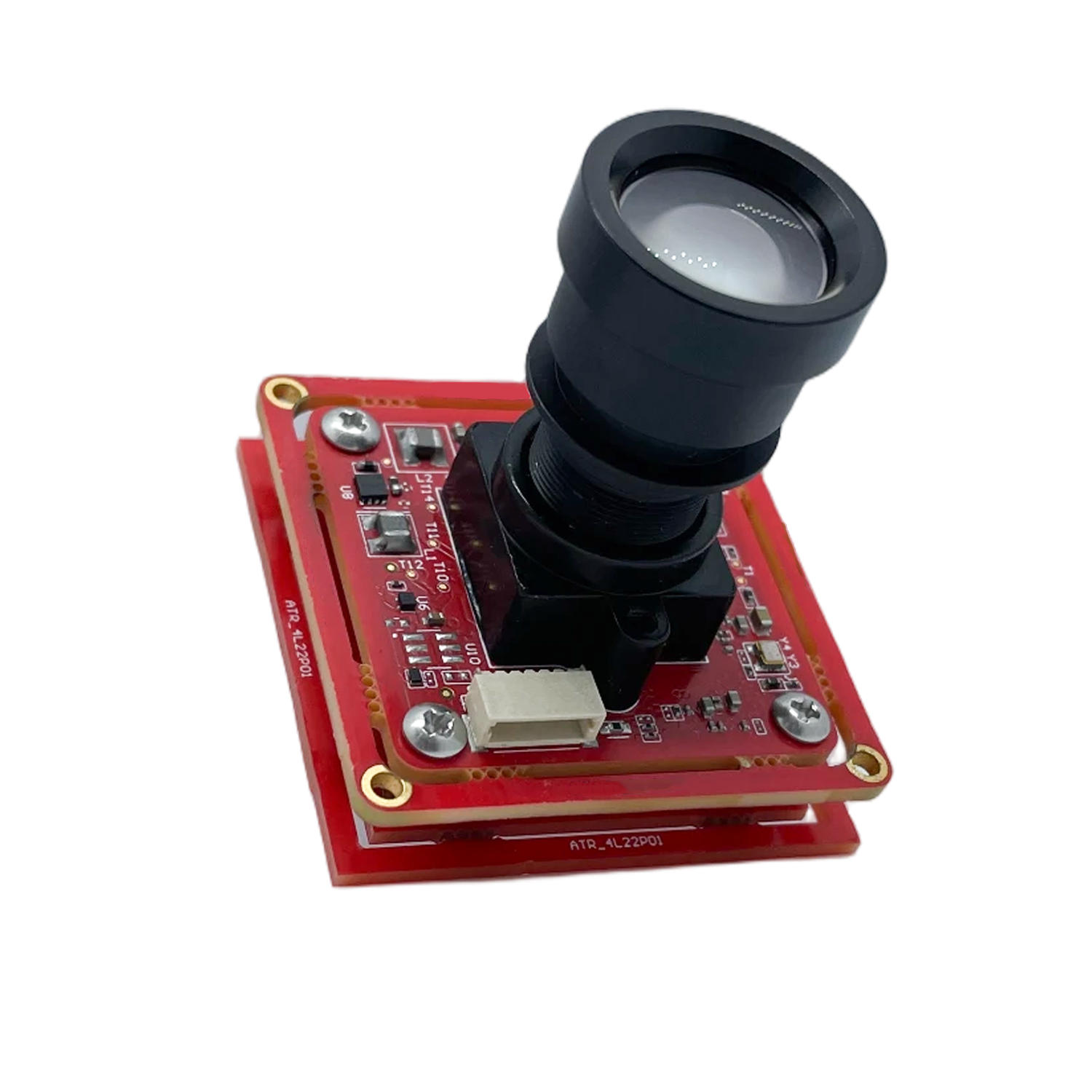 Vadzo's Falcon-521CRS is a 5MP color USB 3.0 Camera insurance telematics camera built on the Onsemi AR0521 sensor, delivering resolution with high dynamic range, LED flicker mitigation, and low-noise color output over a UVC-compliant USB 3.0 interface. Designed for embedded vision engineers and OEM developers building vehicle-mounted evidence recording systems, the camera addresses the three primary imaging failure modes in dashcam deployments: headlight-to-road luminance contrast in night scenes, LED traffic signal duty-cycle dropout, and motion blur under low-light high-speed conditions. The 38mm x 38mm board integrates directly into dashcam enclosures and fleet telematics hardware without custom driver development.
FORT WORTH, TX / ACCESS Newswire / July 14, 2026 / Vadzo Imaging, a provider of embedded vision solutions, today announces the launch of the Falcon-521CRS, a 5MP color USB 3.0 camera insurance telematics camerabuilt on the Onsemi AR0521 image sensor. Purpose-built for vehicle-mounted telematics applications including accident reconstruction camera deployments, claims evidence capture, fleet incident recording, and driver behavior monitoring, the Falcon-521CRS delivers 2592 x 1944 resolution over a UVC-compliant USB 3.0 interface with high dynamic range, LED flicker mitigation, and low-noise color imaging in a production-ready embedded form factor.
Vehicle-mounted imaging operates in one of the most optically hostile environments a CMOS sensor encounters. The luminance ratio between an active headlight source and the surrounding road surface at night can span five or more stops of dynamic range within a single frame. A camera sensor optimized for average scene luminance will clip headlight data in night scenes or overexpose in daylight conditions. Neither condition is acceptable for a 5MP accident evidence camera whose output may be submitted to an insurer, fleet operator, or enforcement authority.
LED traffic signals and vehicle brake lights operate on pulse-width modulation duty cycles. At standard frame rates, the sensor exposure window can open during the off phase of the PWM cycle, producing a dark artefact where the lit signal should appear. In accident documentation camera footage, a frame showing an incorrect signal state creates a data integrity failure that undermines the evidentiary value of the recording. Motion blur is a compounding factor: at 100 km/h a vehicle travels approximately 28 metres per second, and exposure windows long enough to compensate for low light will smear fast-moving objects across the frame. An motion blur reduction USB camera architecture must balance exposure time, gain, and noise floor simultaneously to produce frames usable for license plate recognition and scene reconstruction.
Engineering Explanation: How the AR0521 Solves These Challenges
The Onsemi AR0521 is a 5MP CMOS image sensor built with a specific emphasis on high dynamic range performance and low-noise architecture in challenging illumination environments. The 1/2.5" optical format with a 2.2 µm pixel pitch delivers 2592 x 1944 resolution through a rolling shutter readout that supports sensor-level multi-exposure HDR techniques.
The AR0521's HDR modes extend the usable luminance range within the sensor's capture process, retaining recoverable pixel data in both the bright zone around headlight sources and the darker road surface within the same frame. This is achieved through sensor-level exposure control rather than software-side post-processing, so the dynamic range benefit is preserved in the full-resolution output before any ISP manipulation reaches the host system.
LED flicker mitigation in the AR0521 aligns the integration period to the PWM duty cycle of LED light sources so that a complete illumination cycle is always captured within each frame of exposure. This eliminates the duty-cycle dropout artefact at the sensor level without frame interpolation or post-processing, preserving the temporal authenticity of the captured footage. For a video telematics camera recording intersection events, reliable signal-state representation is the baseline evidentiary requirement. The sensor's low-noise architecture allows the exposure window to remain short enough for motion clarity while maintaining signal-to-noise ratios that support visual interpretation and AI-based scene analysis. This is the engineering rationale for selecting the AR0521 as the foundation of a claims evidence camera platform.
Product Overview
The Falcon-521CRS integrates the Onsemi AR0521 sensor on a compact 38mm x 38mm board with a USB 3.0 Type-C interface and full UVC compliance, making it a plug-and-play OEM telematics camera module that streams immediately on Windows, Linux, and Android. Without custom driver development. The S-Mount (M12) lens holder supports standard optics selection for the deployment field of view. The board operates across an extended temperature range suited to in-vehicle environments where thermal cycling between cold start and operating temperature is a daily condition.
Key specs: 5MP (2592 x 1944) | Onsemi AR0521 1/2.5" 2.2 µm | Rolling Shutter | Color | High Dynamic Range | LED Flicker Mitigation | USB 3.0 UVC | S-Mount (M12) | 38mm x 38mm | Windows, Linux, Android | RoHS 3, REACH
Key Capabilities of the Falcon-521CRS Onsemi AR0521 5MP Insurance Telematics Camera
5MP Resolution for Evidence-Grade Spatial Detail
At 5MP, the AR0521 captures sufficient pixel density for license plate identification, vehicle classification, and roadway geometry analysis within a single wide-angle frame. This is the resolution threshold below which single-camera telematics systems must crop the scene to identify plates or accept that identification will fail at longer capture distances. For crash analysis camera review and reconstruction workflows, the full 5MP output preserves spatial information from the moment of capture without requiring post-capture upscaling.
High Dynamic Range for Day and Night Telematics Imaging
The AR0521's HDR architecture manages the headlight-to-road luminance contrast that is the primary exposure challenge in night driving. By retaining recoverable pixel data across the scene's full luminance range within the sensor integration process, the Falcon-521CRS produces frames where headlight zones do not obliterate vehicle geometry and plate data behind them, and where dark road surfaces retain enough signal for lane marking and position analysis. For a 5MP day night HDR camera deployment, this means that the scene detail present now of an incident is available in the recorded footage rather than lost to saturation or underexposure.
LED Flicker Mitigation for Traffic Signal Accuracy
The AR0521's LED flicker mitigation synchronizes the sensor integration period to the PWM duty cycle of traffic signals, vehicle lighting, and illuminated signage. In traffic law enforcement camera and insurance claims applications, accurate signal-state representation is not a quality metric. It is a legal requirement for footage that accurately represents conditions at the time of an incident. The sensor-level implementation preserves temporal authenticity without post-processing, making the Falcon-521CRS an appropriate foundation for a black box camera module where the evidentiary integrity of captured footage must be unimpeachable.
Low-Noise Color Architecture for High-Speed Scene Capture
Short exposure windows necessary at vehicle operating speeds to reduce photon count per pixel, increasing the relative noise contribution in the final image. The AR0521's low-noise color architecture maintains acceptable signal-to-noise ratios at short integration times, allowing the Falcon-521CRS to operate as a 5MP LED flicker mitigation camera and a motion-sharp dashcam simultaneously. Color output uses a standard Bayer pattern with sensor-level processing that preserves accurate hues and saturation across the daylight-to-night operating range.
USB 3.0 UVC Interface for Plug-and-Play OEM Integration
Full UVC compliance on the USB 3.0 interface removes custom driver development from the OEM integration scope. The camera registers as a standard video input device on Windows, Linux, and Android on connection. For embedded telematics camera development teams, UVC compliance eliminates driver compatibility risk across OS versions and reduces long-term platform maintenance overhead. The USB 3.0 interface provides sufficient bandwidth for 5MP resolution streaming without compression artifacts that would degrade footage quality for claims and reconstruction analysis.
Compact Form Factor for In-Vehicle OEM Deployment
The 38mm x 38mm board with S-Mount (M12) lens holder fits directly into dashcam enclosure designs, rearview mirror housings, and fleet telematics module enclosures without board redesign. USB-powered architecture eliminates dedicated power regulators from the host system design. RoHS 3 and REACH conformance positions the module as a production-ready component for OEM products distributed into regulated markets globally.
"Insurance telematics is one of the few embedded vision segments where the image quality standard is defined by legal and evidentiary requirements rather than system performance metrics. A fleet incident camera that clips headlights, misrepresents traffic signal state, or blurs fast-moving objects does not just produce poor quality footage. It produces footage that cannot be relied upon in claims of adjudication or accident reconstruction. The AR0521 addresses the three specific failure modes of standard dashcam sensors: dynamic range at night, LED signal accuracy under PWM sources, and noise-floor-induced motion blur at speed. The Falcon-521CRS brings those sensor-level capabilities into a form factor and interface that OEM telematics developers can integrate directly without starting from a reference design." - Alwin Vincent, Product Manager, Vadzo Imaging
Applications
Insurance Claims and Accident Reconstruction
Insurers and claims adjusters require footage in which license plates are readable, signal states are correctly captured, and spatial relationships between vehicles and infrastructure are geometrically interpretable. The Falcon-521CRS addresses each requirement through the AR0521's 5MP resolution for spatial detail, HDR for luminance range in mixed lighting, and LED flicker mitigation for accurate signal-state representation. In formal reconstruction workflows, analysts use video footage to establish pre-impact speed, trajectory, braking events, and relative vehicle positions. The AR0521 accident reconstruction camera architecture of the Falcon-521CRS provides the low-noise color output and motion clarity that makes this level of analysis technically feasible from dashcam-sourced footage.
Fleet Management and Driver Behavior Monitoring
Fleet operators deploying driver behavior camera systems require continuous high-quality recording across urban stop-start driving under varied artificial illumination, motorway cruising at speed in low ambient light, and rural routes with no infrastructure lighting. The Falcon-521CRS handles this operational range through the AR0521's combined HDR and low-noise architecture. At 5MP, the camera provides the pixel density required for simultaneous in-cabin and forward-facing analysis in an fleet safety camera application without resolution compromise.
Traffic Law Enforcement and Roadway Analytics
A traffic law enforcement camera in a vehicle-mounted enforcement role must capture license plates at closing speeds, resolve signal states accurately, and maintain image quality through the operational temperature range of the deployment vehicle. The AR0521's LED flicker mitigation is directly relevant to signal-state enforcement applications where incorrect signal representation in captured footage creates a legal challenge to the enforcement action. For roadway analytics cameraapplications, the 5MP output provides sufficient spatial resolution for vehicle classification and incident detection from a single dashboard-mounted installation.
Connected Vehicle and Event Data Recording
Modern connected vehicle telematics platforms integrate imaging with GPS telemetry, accelerometer data, and cellular uplinks. The Falcon-521CRS functions as the imaging node in these architectures, capturing the forward video stream synchronized with the telematics data record. As a connected vehicle camera with USB 3.0 UVC compliance, it integrates with the host telematics processor without proprietary driver development. For event data recorder camera applications, the HDR and low-noise architecture ensure that frames captured at the moment of trigger are of sufficient quality for claims and reconstruction use regardless of ambient lighting conditions.
SDK and Software Support
The Falcon-521CRS is supported by the Vadzo VISPA ARC SDK, providing programmatic control over streaming parameters, region of interest configuration, exposure, gain, trigger synchronization, binning, and windowing. APIs are available in C, C++, C#, and Python across Windows, Linux, and embedded platforms. For OEM teams building production-grade connected dashcam cameraapplications, the SDK enables full sensor-level control beyond the UVC baseline. Smart GPIO management, still image capture, image flip, and secure firmware update functions are included. UVC compliance ensures the module streams immediately on connection for rapid evaluation before SDK integration begins.
Frequently Asked Questions
Q: Why does dashcam footage lose detail in headlight zones and tunnel transitions even at high resolution?
A: Resolution and dynamic range are two completely different sensor capabilities, and high resolution does not fix a dynamic range problem. Every standard image sensor exposes the full frame at a single integration time chosen by the auto-exposure algorithm. In a night driving scene with active headlights, the luminance gap between the headlight source and the road surface can easily span five or more stops. When the sensor exposes midtones, headlight zones blow out to white, and any license plates or vehicle geometry sitting behind them are gone. When it pulls back to protect those highlights, the dark road surface loses all usable signals. Tunnel transitions make this worse because the sensor goes from correctly exposing a sunlit road to being six or seven stops overexposed at the moment the vehicle enters. It is not a slow adjustment. The shift happens within fractions of a second, and standard sensors cannot keep up.
Sensor-level HDR is the correct fix. In a native HDR architecture, the sensor captures high-gain and low-gain data within the same integration process and combines them into a single output that retains a recoverable signal across the full scene luminance range. That is why 5MP HDR dashcam USB camera products built on sensors with native HDR support produce frames where headlight zones and shadow areas both contain usable detail simultaneously. Software correction cannot recover data that was never captured.
Q: Why do LED traffic signals and brake lights appear switched off in dashcam recordings even when they are active?
A: LED traffic signals, brake lights, and warning flashers run on pulse-width modulation. The LED element switches on and off at a fixed duty cycle that can range from roughly 100 Hz to well above 1000 Hz, depending on the specific fitting. A camera sensor captures light by integrating photons over a fixed exposure window. If that window opens during the off phase of the PWM cycle, the LED source is electrically dark for the full duration of the exposure and appears absent in the captured frame even though it was physically lit.
For accident reconstruction and insurance claims adjudication, that is not a quality issue. A frame where an active traffic signal appears dark is an evidentiary failure because the footage no longer accurately represents what the scene looked like at the moment of capture. LED flicker mitigation addresses this by synchronizing the sensor integration period to the PWM duty cycle so a complete illumination cycle always falls within each frame of exposure. This is a sensor-level function. It cannot be replicated through post-processing on the host side. Any camera product designed for telematics evidence recording or fleet incident documentation needs this built into the sensor architecture from the start, not applied afterward.
Q: What sensor specifications matter most for insurance telematics and accident reconstruction camera products?
A: Three sensor-level specifications determine whether a video telematics camera product produces footage that is genuinely reliable for insurance claims and accident reconstruction.
The dynamic range has to come first. The sensor must retain recoverable pixel data across the full scene luminance range without clipping headlight zones or losing shadow detail, and this needs to happen within the sensor integration process itself rather than through software-side merging after the fact. LED flicker mitigation is the second requirement. The sensor integration period must synchronize the PWM duty cycle of LED traffic signals and vehicle lighting so that signal states are accurately represented in every captured frame. For evidence applications, this is not a nice-to-have. It directly affects the legal reliability of the footage. Noise floor at short exposure times is the third. At vehicle speeds of 100 km/h and above, a vehicle covers roughly 28 metres per second. The sensor has to maintain usable signal-to-noise ratios at brief integration times to prevent motion blur without requiring longer exposures that introduce frame smear.
Vadzo Imaging selects the Onsemi AR0521 for its insurance telematics camera products precisely because it addresses all three of these at the sensor architecture level. The 1/2.5" 5MP CMOS with 2.2 µm pixel pitch delivers sensor-level HDR and LED flicker mitigation alongside a low-noise color architecture that keeps footage sharp at speed. OEM developers can explore Vadzo's full telematics and fleet management camera portfolio at vadzoimaging.com.
Q: How does 5MP resolution in a USB camera module improve license plate readability and scene reconstruction for fleet telematics?
A: Resolution determines how much spatial information the sensor locks in at the exact moment of an incident. Below 5MP, single-camera telematics systems hit a practical limit: either crop the scene to improve plate readability at the cost of losing surrounding context or accept that identification will fail at longer capture distances. At 5MP, the sensor captures sufficient pixel density for license plate identification, vehicle classification, and roadway geometry analysis within a single wide-angle frame without relying on post-capture upscaling.
For crash analysis and reconstruction workflows, this is significant because analysts use recorded video to establish pre-impact speed, trajectory, braking events, and relative vehicle positions. Spatial information that was not captured now of the incident cannot be recovered from the recording afterward. USB 3.0 bandwidth supports streaming the full 5MP output without introducing compression artifacts that would degrade footage quality during claims review.
UVC compliance on the USB 3.0 interface also removes custom driver development from the OEM integration scope entirely. The camera product registers as a standard video input on Windows, Linux, and Android upon connection, with no additional driver work required. For embedded telematics development teams that eliminate driver compatibility risk across OS versions and reduce the long-term maintenance overhead that comes with proprietary interfaces.
Vadzo Imaging builds this specification profile into production-ready camera products designed specifically for fleet telematics and evidence recording OEM integration. Engineering teams can review technical datasheets, CAD files, and SDK documentation at vadzoimaging.com.
Q: What should OEM developers look for in a plug-and-play embedded camera module for connected vehicle and event data recorder applications?
A: Connected vehicle telematics and event data recorder applications place a specific set of demands on the imaging front-end. The module has to deliver enough resolution for license plate capture and scene reconstruction. It has to handle the luminance contrast of night driving with oncoming headlights through sensor-level HDR rather than software correction. It has to accurately represent LED traffic signal states through PWM-synchronized integration. And it has to physically fit within dashcam enclosures or fleet telematics module housings without requiring board to redesign around it. Integration of practicality matters as much as the sensor specifications during OEM development. UVC compliance on a USB 3.0 interface means the camera product registers as a standard video device on connection with no custom driver development required on Windows, Linux, or Android. SDK support with APIs in C, C++, C#, and Python gives development teams full sensor-level control beyond the UVC baseline for applications that need programmatic access to exposure, gain, ROI, trigger synchronization, and firmware updates.
Vadzo Imaging's camera products for fleet telematics, insurance evidence capture and connected vehicle systems are engineered for exactly this integration profile. Vadzo provides evaluation units with no minimum order quantity and direct engineering support through design-in and production ramps. Engineering teams can access the full technical datasheet, CAD files, and SDK documentation at vadzoimaging.com or contact Vadzo's sales team at [email protected] for volume pricing, customization requirements, and integration support.
Availability
The Falcon-521CRS Onsemi AR0521 5MP insurance telematics camera is available now for evaluation and pre-production sampling, with production quantities available for OEM deployment. Engineering teams can access the full technical datasheet, CAD files, and SDK documentation at vadzoimaging.com, or contact Vadzo's sales team at [email protected] for volume pricing, customization requirements, and integration support.
About Vadzo Imaging
Vadzo Imaging develops embedded and machine vision camera products for OEMs and system integrators, building production-ready vision systems across industrial automation, robotics, healthcare, and smart infrastructure. The company's imaging platforms span USB, MIPI, GigE, Wi-Fi, and SerDes interfaces, covering the full range of embedded deployment architectures from compact edge devices to distributed networked systems. Beyond hardware, Vadzo provides end-to-end imaging support including sensor integration, ISP tuning, firmware development, and SDK frameworks, giving engineering teams a single partner from initial evaluation through production lifecycle management. Explore Vadzo's full telematics and fleet management camera portfolio or visit www.vadzoimaging.com.
Media Contact:
Alwin Vincent
Vadzo Imaging
Email: [email protected]
LinkedIn: Vadzo Imaging
YouTube: Vadzo Imaging
X: Vadzo Imaging
SOURCE: Vadzo Imaging