
Kinross reports strong 2026 first-quarter results
 Delivered record free cash flow for the 4 th consecutive quarter, margins continued to outpace gold price
Returned approximately $350 million to shareholders to date in 2026, $1 billion since Q1 2025
Significant progress across pipeline of development projects
TORONTO, April 29, 2026 (GLOBE NEWSWIRE) -- Kinross Gold Corporation (TSX: K, NYSE: KGC) (“Kinross” or the “Company”) today announced its results for the first quarter ended March 31, 2026.
This news release contains forward-looking information about expected future events and financial and operating performance of the Company. We refer to the risks and assumptions set out in our Cautionary Statement on Forward-Looking Information located on pages 24 and 25 of this release. All dollar amounts are expressed in U.S. dollars, unless otherwise noted.
2026 first-quarter highlights:
Return of capital to shareholders:
Operations:
Development projects:
Sustainability:
CEO commentary:
J. Paul Rollinson, CEO, made the following comments in relation to 2026 first-quarter results:
“Kinross delivered another excellent quarter. We generated record free cash flow of approximately $840 million, representing our fourth consecutive quarterly record. Strong operational performance and disciplined cost management drove record margins that continue to outpace the rise in the gold price, which highlights our ability to continue to hold the line on costs.
“We have returned approximately $350 million to shareholders to date in 2026 through dividends and share repurchases, reinforcing our commitment to disciplined capital allocation and delivering meaningful returns. Over the past 12 months, we have returned over $1 billion to shareholders, and through our share buyback program, have reduced our outstanding float by over 3%.
“In the current situation of global uncertainty, we continue to benefit from an attractive relative cost position, supported by our longstanding approach to mitigate cost pressures. This includes the hedging of fuel and currency exposures as well as the continued execution of our grade enhancement strategy. Both are proving effective in the current environment of elevated oil prices and differentiate Kinross.
“In Q1, our pipeline of high-quality development projects advanced on plan. At Great Bear, we continued to make strong progress across both Advanced Exploration and the Main Project. Engineering and procurement are advancing as planned, and new exploration results further reinforce the scale and long-term potential of the deposit.
“At Lobo-Marte, the submission of the Environmental Impact Assessment in April marked an important milestone, formally initiating the permitting process for this long-life, large-scale growth project. Our new U.S. projects – Round Mountain Phase X, Curlew and Redbird – made steady progress and remain firmly on track. Also, we are continuing our studies on our significant resource inventory as we target additional potential mine life extensions across our portfolio.”
Summary of financial and operating results
The following operating and financial results are based on first-quarter gold equivalent production:
Production: Kinross produced 492,563 Au eq. oz. in Q1 2026, compared with 512,088 Au eq. oz. in Q1 2025, a decrease of 4%, as planned. Higher production from Paracatu was offset by lower production from Bald Mountain, Fort Knox, Round Mountain, and Tasiast.
Average realized gold price 8: During the quarter, the average realized gold price was $4,873 per ounce, compared with $2,857 per ounce in Q1 2025.
Revenue: Revenue increased to $2,407.7 million in Q1 2026, compared with $1,497.5 million during Q1 2025. The 61% year-over-year increase was due to the increase in the average realized gold price.
Production cost of sales: Production cost of sales per Au eq. oz. sold 2 increased to $1,397 for the quarter, compared with $1,043 in Q1 2025. Attributable production cost of sales per Au eq. oz. sold 1 increased to $1,380 for the quarter, compared with $1,038 in Q1 2025. The increase is primarily due to higher royalty costs as a result of the higher average realized gold price, and timing of inventory movements.
Attributable production cost of sales per Au oz. sold on a by-product basis 1 was $1,296 in Q1 2026, compared with $1,010 in Q1 2025, based on attributable gold sales of 474,459 ounces and silver sales of 658,544 ounces.
Margins 4: Kinross’ margin per Au eq. oz. sold increased by 92% to a record $3,476 for the first quarter, compared with the Q1 2025 margin of $1,814, outpacing the rise in average realized gold price by over 20% year-over-year.
Attributable all-in sustaining cost 1: Attributable all-in sustaining cost per Au eq. oz. sold was $1,732 in Q1 2026, compared with $1,355 in Q1 2025.
In the first quarter, attributable all-in sustaining cost per Au oz. sold on a by-product basis was $1,657, compared with $1,331 in Q1 2025.
Operating cash flow 3: Operating cash flow was $1,139.5 million for Q1 2026, compared with $607.1 million for Q1 2025.
Attributable adjusted operating cash flow 1 for Q1 2026 was $1,129.3 million, compared with $620.3 million for Q1 2025.
Attributable free cash flow 1: Attributable free cash flow more than doubled to $837.5 million in the quarter, compared with $380.8 million in Q1 2025.
Reported net earnings 5: Reported net earnings more than doubled to $843.0 million for Q1 2026, or $0.70 per share, compared with reported net earnings of $368.0 million, or $0.30 per share, for Q1 2025.
Adjusted net earnings 6 more than doubled to $854.1 million, or $0.71 per share, for Q1 2026, compared with $364.0 million, or $0.30 per share, for Q1 2025.
Reported net earnings and adjusted net earnings in Q1 2026 included $91 million of withholding tax expense, of which $65 million relates to taxes payable in future quarters as a result of the repatriation of strong cash flow generation largely in Mauritania.
Capital expenditures 9: Capital expenditures increased to $283.2 million for Q1 2026, compared with $207.7 in Q1 2025, driven by the ramp-up of development activities at Great Bear, Curlew, Round Mountain Phase X, and Bald Mountain Redbird Phases 1 and 2. These increases were partially offset by lower spending on capital development due to planned mine sequencing at Tasiast.
Attributable capital expenditures 1 were $278.9 million for Q1 2026, compared with $204.1 million for Q1 2025.
Balance sheet
Kinross added approximately $440 million in cash to the balance sheet after returning capital to shareholders and funding its capital expenditures. As of March 31, 2026, Kinross had cash and cash equivalents of $2.2 billion, compared with $1.7 billion at December 31, 2025.
The Company had additional available credit 10 of $1.7 billion and total liquidity 7 of approximately $3.9 billion as of March 31, 2026.
Return of capital to shareholders
Kinross’ 2026 buyback strategy is on track. The Company plans to allocate 40% of free cash flow to shareholders through both share buybacks and dividends, assuming no significant changes to gold prices or Kinross’ operations.
Kinross repurchased approximately $250 million in shares during the quarter, and approximately $300 million year-to-date (representing 9.2 million shares). Including its quarterly dividend, Kinross has returned approximately $350 million in capital to shareholders to date in 2026. Since April 2025, Kinross has repurchased approximately $900 million in shares, reducing our share count by more than 3%, and returned approximately $1 billion in capital to shareholders.
As part of its quarterly dividend program, the Company also declared a dividend of $0.04 per common share payable on June 4, 2026, to shareholders of record as of May 21, 2026.
Outlook
The following section of the news release represents forward-looking information and users are cautioned that actual results may vary. We refer to the risks and assumptions contained in the Cautionary Statement on Forward-Looking Information on pages 24 and 25 of this news release.
Kinross remains on track to deliver its 2026 annual guidance for production, cost of sales per ounce, all-in sustaining cost and capital expenditures. Kinross also remains on track to achieve its Effective Tax Rate (ETR) guidance with a lower expected ETR from Q2 2026 to Q4 2026, and on track to meet its full-year taxes paid guidance. Due in part to Kinross’ ongoing hedging programs, cost impacts of rising crude oil prices beginning in March 2026 have been minimal and are not expected to affect the Company’s ability to achieve its full-year cost guidance.
To better reflect global market conditions and the potential impacts of elevated oil prices, Kinross is providing more detail on its oil price sensitivity 11 for its full-year guidance in the table below.
Operating results
Mine-by-mine summaries for 2026 first-quarter operating results may be found on pages 11 and 15 of this news release. Highlights include the following:
At Tasiast, quarter-over-quarter production increased, driven by strong grades, and cost of sales per ounce sold decreased. Year-over-year, production was lower primarily due to the timing of ounces processed through the mill, partially offset by higher grades due to planned mine sequencing. Compared with Q1 2025, cost of sales per ounce sold increased primarily due to higher royalties as a result of higher gold prices.
At Paracatu, production increased quarter-over-quarter with record recoveries as a result of a multi-front optimization program across the processing plant, and increased year-over-year due to the improved recoveries as well as the timing of ounces processed through the mill. Cost of sales per ounce sold increased slightly quarter-over-quarter due to higher royalty costs, and increased year-over-year as a result of higher royalty and drilling contractor costs, and strengthening of the Brazilian real.
At La Coipa, production decreased quarter-over-quarter mainly due to lower tonnes processed as a result of a planned mill maintenance shutdown in March and lower grades due to planned mine sequencing. Year-over-year, production increased primarily due to the timing of ounces processed through the mill, partially offset by the decrease in grades, and cost of sales per ounce sold was higher due to increased labour and reagent costs, strengthening of the Chilean peso, and higher royalties.
At Fort Knox, production was higher quarter-over-quarter, with increased cost of sales per ounce sold due to the timing of ounces processed through the mill and heap leach pads. Year-over-year, production decreased primarily due to lower mill grades and recoveries, partially offset by the timing of ounces processed through the mill. Compared with Q1 2025, cost of sales per ounce sold increased primarily due to processing more tonnes at lower grade through the mill as well as timing of ounces recovered.
At Round Mountain, production decreased quarter-over-quarter and year-over-year primarily due to lower-grade, lower-recovery stockpile feed as mining transitions from Phase W to Phase S. Higher-grade, higher-recovery ore from Phase S is expected in the second half of the year. Cost of sales per ounce sold increased in both comparable periods due to the lower production.
At Bald Mountain, production decreased quarter-over-quarter due to the timing of ounces recovered from heap leach pads, and decreased year-over-year due to fewer tonnes placed on the heap leach pads and lower grades. Cost of sales per ounce sold increased quarter-over-quarter due to fewer ounces produced, and increased year-over-year as a result of the lower production and higher royalties.
Development projects
Great Bear
At Great Bear, Kinross continues to progress its AEX program alongside permitting, detailed engineering and procurement of major equipment for the Main Project.
For AEX, construction of the water treatment plant, including mechanical, piping, and electrical work, was substantially complete, with surface construction approximately 90% complete. In April 2026, the Company received its remaining AEX permits from the Ontario Ministry of Environment, Conservation and Parks. Remaining surface work includes ponds and pads construction, which must be completed before first blast of the underground decline. Underground development at AEX is expected to provide access for infill drilling of the resource and exploration drilling to further delineate extensions of mineralization.
Regarding the Main Project, detailed engineering is advanced and is approximately 45% complete. Procurement of major equipment continues. Open pit and underground mobile equipment Request for Proposal (“RFP”) evaluations are ongoing. RFPs for paste plant equipment, building, and tank packages have been issued.
Main Project permitting continues to advance. Federally, Great Bear submitted the third and final phase of its Impact Statement to the Impact Assessment Agency of Canada in March 2026 as planned. Relevant submissions have also been submitted to Fisheries and Oceans Canada.
Provincially, Great Bear continues to work with the Ontario authorities to advance provincial permitting under the One Project, One Process (“1P1P”) permitting process. The next 1P1P steps are approval of the Project Definition and issuance of an Integrated Authorization and Permitting Plan.
In relation to Lac Seul and Wabauskang First Nations, on whose traditional territory the Great Bear Project resides, we are pleased to report that negotiations on the Impact and Benefits Agreement continue to advance based on a recently signed and confidential Memorandum of Understanding that captures the key economic compensatory and procurement elements.
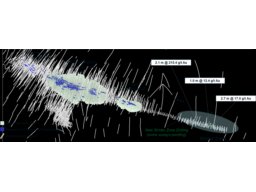
Recent drilling in the new Strider zone has returned mineralized intercepts on trend with the main LP zone, over 2.4 kilometres away from the existing resource. Drilling is ongoing to further test and delineate the structure along strike and at depth.
Highlights include:
Great Bear Plan View:
A photo accompanying this announcement is available at https://www.globenewswire.com/NewsRoom/AttachmentNg/dd58fa8b-ba33-4c3c-82d7-c5786facd287
Lobo-Marte
Lobo-Marte’s Environmental Impact Assessment was submitted in April 2026 and is under review by the regulators, formally initiating the permitting process and marking a milestone for this growth project.
Lobo-Marte is expected to support long-life, large-scale production with the potential to produce approximately 4.7 million gold equivalent ounces over a 16-year mine life 14. The project is designed to leverage Kinross’ existing operating experience and infrastructure in Chile.
The Company looks forward to providing a project update in the second half of the year.
Round Mountain Phase X
Underground development at Round Mountain Phase X is progressing well and is slightly ahead of schedule, with over 7,200 metres developed to date. Engineering work is progressing well, site planning for surface and underground infrastructure are well advanced. During the quarter, Kinross marked the completion of all major operational permitting for the Phase X project. Procurement of long lead items including mining equipment is progressing as planned.
Curlew
At Curlew, Kinross progressed key site infrastructure as well as detailed engineering and procurement for the mill refurbishment. The Company has selected a contractor for the mill refurbishment, with mobilization activities beginning. Underground mine development also advanced in Q1 2026 ahead of schedule to de-risk the path to first production in 2028.
Exploration continued to demonstrate the potential for additional high-grade mineralization with successful drilling at North Stealth and Roadrunner. At North Stealth, recent drilling intersected strong grades and widths, confirming continuity and supporting the extension of mineralization to the east and west. At Roadrunner, drilling continues to return high-grade intercepts, reinforcing the prospectivity of the target area.
Highlights include:
Curlew Cross Section:
A photo accompanying this announcement is available at https://www.globenewswire.com/NewsRoom/AttachmentNg/a407cab2-ac71-4075-a17c-68c6984a7785
Bald Mountain Redbird
At Redbird, Kinross continued to advance project execution across several key areas. Mining is ongoing, the construction of processing infrastructure is progressing well, and earthworks for the heap leach pad extension are ahead of schedule, supported by favourable winter conditions. Significant progress was made on the ordering and initial receipt of major mining equipment, and the design and engineering for the SART plant progressed on plan.
Sustainability
Kinross advanced its research partnership with Lakehead University with a five-year funding commitment to support the Northern Ontario Heritage Fund Industrial Research Chair in Mineral Exploration, established with grant funding from the Northern Ontario Heritage Fund Corporation. In addition to supporting exploration efforts at Great Bear, the partnership is expected to play an important role in training and developing the future workforce through graduate students and field assistants, helping build the skilled talent base in the region and create opportunities for local communities.
In Chile, Kinross advanced its commitment to community well-being by partnering with public and private stakeholders to finance the development of a new angiography unit at the Copiapó Regional Hospital. The investment addresses a critical healthcare gap in the Atacama region, which previously lacked access to advanced cardiovascular diagnostic and treatment capabilities, and is expected to improve timely care and health outcomes for thousands of residents.
Kinross plans to publish its 2025 Sustainability Report in the second quarter, providing a transparent account of its Sustainability performance and outlining priorities in the year ahead and beyond.
Conference call details
In connection with this news release, Kinross will hold a conference call and audio webcast on April 30, 2026, at 8:00 a.m. EDT to discuss the results, followed by a question-and-answer session. To access the call, please dial:
Canada & US toll-free – (888) 596-4144; Conference ID: 9425112
Outside of Canada & US – +1 (646) 968-2525; Conference ID: 9425112
Replay (available up to 14 days after the call):
Canada & US toll-free – +1 (800) 770-2030; Conference ID: 9425112 #
Outside of Canada & US – +1 (609) 800-9909; Conference ID: 9425112 #
You may also access the conference call on a listen-only basis via webcast at our website www.kinross.com. The audio webcast will be archived on www.kinross.com.
Annual Meeting of Shareholders
Kinross’ Annual Meeting of Shareholders will be held on Thursday, April 30, 2026, at 10:00 a.m. EDT.
The meeting will be accessible online at: https://meetings.lumiconnect.com/400-541-772-335. The link to the meeting will also be accessible at www.kinross.com and will be archived for later use.
Voting and participation instructions for eligible shareholders are provided in the Company’s Notice of Annual Meeting of Shareholders and Management Information Circular.
This release should be read in conjunction with Kinross’ 2026 first-quarter unaudited Financial Statements and Management’s Discussion and Analysis report at www.kinross.com. Kinross’ 2026 first-quarter Financial Statements and Management’s Discussion and Analysis have been filed with Canadian securities regulators (available at www.sedarplus.ca) and furnished with the U.S. Securities and Exchange Commission (available at www.sec.gov). Kinross shareholders may obtain a copy of the financial statements free of charge upon request to the Company.
About Kinross Gold Corporation
Kinross is a Canadian-based global senior gold mining company with operations and projects in the United States, Brazil, Mauritania, Chile and Canada. Our focus is on delivering value based on the core principles of responsible mining, operational excellence, disciplined growth, and balance sheet strength. Kinross maintains listings on the Toronto Stock Exchange (symbol: K) and the New York Stock Exchange (symbol: KGC).
Media Contact
Samantha Sheffield
Director, Corporate Communications
phone: 416-365-3034
Samantha.Sheffield@Kinross.com
Investor Relations Contact
David Shaver
Executive Vice-President, Investor Relations & Communications
phone: 416-365-2854
InvestorRelations@Kinross.com
Review of operations
Consolidated balance sheets
Consolidated statements of operations
Consolidated statements of cash flows
Reconciliation of non-GAAP financial measures and ratios
The Company has included certain non-GAAP financial measures and ratios in this document. These financial measures and ratios are not defined under IFRS and should not be considered in isolation. The Company believes that these financial measures and ratios, together with financial measures and ratios determined in accordance with IFRS, provide investors with an improved ability to evaluate the underlying performance of the Company. The inclusion of these financial measures and ratios is meant to provide additional information and should not be used as a substitute for performance measures prepared in accordance with IFRS. These financial measures and ratios are not necessarily standard and therefore may not be comparable to other issuers.
Adjusted Net Earnings and Adjusted Net Earnings per Share
Adjusted net earnings and adjusted net earnings per share are non-GAAP financial measures and ratios which determine the performance of the Company, excluding certain impacts which the Company believes are not reflective of the Company’s underlying performance for the reporting period, such as the impact of foreign exchange gains and losses, reassessment of prior year taxes and/or taxes otherwise not related to the current period, impairment charges (reversals), gains and losses and other one-time costs related to acquisitions, dispositions and other transactions, and non-hedge derivative gains and losses. Although some of the items are recurring, the Company believes that they are not reflective of the underlying operating performance of its current business and are not necessarily indicative of future operating results. Management believes that these measures and ratios, which are used internally to assess performance and in planning and forecasting future operating results, provide investors with the ability to better evaluate underlying performance, particularly since the excluded items are typically not included in public guidance. However, adjusted net earnings and adjusted net earnings per share measures and ratios are not necessarily indicative of net earnings and earnings per share measures and ratios as determined under IFRS.
The following table provides a reconciliation of net earnings to adjusted net earnings for the periods presented:
Attributable Free Cash Flow
Attributable free cash flow is a non-GAAP financial measure and is defined as net cash flow provided from operating activities less attributable capital expenditures and non-controlling interest included in net cash flows provided from operating activities. The Company believes that this measure, which is used internally to evaluate the Company’s underlying cash generation performance and the ability to repay creditors and return cash to shareholders, provides investors with the ability to better evaluate the Company’s underlying performance. However, this measure is not necessarily indicative of operating earnings or net cash flow provided from operating activities as determined under IFRS.
The following table provides a reconciliation of attributable free cash flow for the periods presented:
See pages 23 and 24 for details of the footnotes referenced within the table above.
Attributable Adjusted Operating Cash Flow
Attributable adjusted operating cash flow is a non-GAAP financial measure and is defined as net cash flow provided from operating activities excluding changes in working capital, certain impacts which the Company believes are not reflective of the Company’s regular operating cash flow, and net cash flows provided from operating activities, net of working capital changes, relating to non-controlling interests. Working capital is excluded given that numerous factors can result in it being volatile. The Company uses attributable adjusted operating cash flow internally as a measure of the underlying operating cash flow performance and future operating cash flow-generating capability of the Company. However, the attributable adjusted operating cash flow measure is not necessarily indicative of net cash flow provided from operating activities as determined under IFRS.
The following table provides a reconciliation of attributable adjusted operating cash flow for the periods presented:
See pages 23 and 24 for details of the footnotes referenced within the table above.
Attributable Average Realized Gold Price per Ounce
Attributable average realized gold price per ounce is a non-GAAP ratio which calculates the average price realized from gold sales attributable to the Company. The Company believes that this measure provides a more accurate measure with which to compare the Company's gold sales performance to market gold prices. The following table provides a reconciliation of attributable average realized gold price per ounce for the periods presented:
See pages 23 and 24 for details of the footnotes referenced within the table above.
Attributable Production Cost of Sales per Equivalent Ounce Sold
Production cost of sales per equivalent ounce sold is defined as production cost of sales, as reported on the consolidated statement of operations, divided by the total number of gold equivalent ounces sold. This measure converts the Company’s non-gold production into gold equivalent ounces and credits it to total production.
Attributable production cost of sales per equivalent ounce sold is a non-GAAP ratio and is defined as attributable production cost of sales divided by the attributable number of gold equivalent ounces sold. This measure converts the Company’s attributable non-gold production into gold equivalent ounces and credits it to total attributable production. Management uses this measure to monitor and evaluate the performance of its operating properties that are attributable to its shareholders.
The following table provides a reconciliation of production cost of sales and attributable production cost of sales per equivalent ounce sold for the periods presented:
See pages 23 and 24 for details of the footnotes referenced within the table above.
Attributable Production Cost of Sales per Ounce Sold on a By-Product Basis
Attributable production cost of sales per ounce sold on a by-product basis is a non-GAAP ratio which calculates the Company’s non-gold production as a credit against its per ounce production costs, rather than converting its non-gold production into gold equivalent ounces and crediting it to total production, as is the case in co-product accounting. Management believes that this ratio provides investors with the ability to better evaluate Kinross’ production cost of sales per ounce on a comparable basis with other major gold producers who routinely calculate their cost of sales per ounce using by-product accounting rather than co-product accounting.
The following table provides a reconciliation of attributable production cost of sales per ounce sold on a by-product basis for the periods presented:
See pages 23 and 24 for details of the footnotes referenced within the table above.
Attributable All-In Sustaining Cost and All-In Cost per Ounce Sold on a By-Product Basis
Attributable all-in sustaining cost and all-in cost per ounce sold on a by-product basis are non-GAAP financial measures and ratios, as applicable, calculated based on guidance published by the World Gold Council (“WGC”). The WGC is a market development organization for the gold industry and is an association whose membership comprises leading gold mining companies including Kinross. Although the WGC is not a mining industry regulatory organization, it worked closely with its member companies to develop these metrics. Adoption of the all-in sustaining cost and all-in cost metrics is voluntary and not necessarily standard, and therefore, these measures and ratios presented by the Company may not be comparable to similar measures and ratios presented by other issuers. The Company believes that the all-in sustaining cost and all-in cost measures complement existing measures and ratios reported by Kinross.
All-in sustaining cost includes both operating and capital costs required to sustain gold production on an ongoing basis. The value of silver sold is deducted from the total production cost of sales as it is considered residual production, i.e. a by-product. Sustaining operating costs represent expenditures incurred at current operations that are considered necessary to maintain current production. Sustaining capital represents capital expenditures at existing operations comprising mine development costs, including capitalized development, and ongoing replacement of mine equipment and other capital facilities, and does not include capital expenditures for major growth projects or enhancement capital for significant infrastructure improvements at existing operations.
All-in cost is comprised of all-in sustaining cost as well as operating expenditures incurred at locations with no current operation, or costs related to other non-sustaining activities, and capital expenditures for major growth projects or enhancement capital for significant infrastructure improvements at existing operations.
Attributable all-in sustaining cost and all-in cost per ounce sold on a by-product basis are calculated by adjusting production cost of sales, as reported on the consolidated statements of operations, as follows:
See pages 23 and 24 for details of the footnotes referenced within the table above.
Attributable All-In Sustaining Cost and All-In Cost per Equivalent Ounce Sold
The Company also assesses its attributable all-in sustaining cost and all-in cost on a gold equivalent ounce basis. Under these non-GAAP financial measures and ratios, the Company’s production of silver is converted into gold equivalent ounces and credited to total production.
Attributable all-in sustaining cost and all-in cost per equivalent ounce sold are calculated by adjusting production cost of sales, as reported on the consolidated statements of operations, as follows:
See pages 23 and 24 for details of the footnotes referenced within the table above.
Capital Expenditures and Attributable Capital Expenditures
Capital expenditures are classified as either sustaining capital expenditures or non-sustaining capital expenditures, depending on the nature of the expenditure. Sustaining capital expenditures typically represent capital expenditures at existing operations including capitalized exploration costs and capitalized development unless related to major projects, ongoing replacement of mine equipment and other capital facilities and other capital expenditures and is calculated as total additions to property, plant and equipment (as reported on the consolidated statements of cash flows), less non-sustaining capital expenditures. Non-sustaining capital expenditures represent capital expenditures for major projects, including major capital development projects at existing operations that are expected to materially benefit the operation, as well as enhancement capital for significant infrastructure improvements at existing operations. Management believes the distinction between sustaining capital expenditures and non-sustaining expenditures is a useful indicator of the purpose of capital expenditures and this distinction is an input into the calculation of attributable all-in sustaining costs per ounce and attributable all-in costs per ounce. The categorization of sustaining capital expenditures and non-sustaining capital expenditures is consistent with the definitions under the WGC all-in cost standard. Sustaining capital expenditures and non-sustaining capital expenditures are not defined under IFRS, however, the sum of these two measures total to additions to property, plant and equipment as disclosed under IFRS on the consolidated statements of cash flows.
Additions to property, plant and equipment per the consolidated statements of cash flows includes 100% of capital expenditures for Manh Choh. Attributable capital expenditures is a non-GAAP financial measure and includes Kinross' 70% share of capital expenditures for Manh Choh. Management believes this to be a useful indicator of Kinross’ cash resources utilized for capital expenditures.
The following table provides a reconciliation of the classification of capital expenditures for the periods presented:
See pages 23 and 24 for details of the footnotes referenced within the tables above.
Endnotes
Cautionary statement on forward-looking information
All statements, other than statements of historical fact, contained or incorporated by reference in this news release including, but not limited to, any information as to the future financial or operating performance of Kinross, constitute “forward-looking information” or “forward-looking statements” within the meaning of certain securities laws, including the provisions of the Securities Act (Ontario) and the provisions for “safe harbor” under the United States Private Securities Litigation Reform Act of 1995 and are based on expectations, estimates and projections as of the date of this news release. Forward-looking statements contained in this news release, include, but are not limited to, those under the headings (or headings that include) “2026 first-quarter highlights”, “Return of capital to shareholders”, “CEO commentary”, “Outlook”, and “Development projects”, as well as statements with respect to our guidance for production, cost guidance, including production costs of sales, all-in sustaining cost of sales, and capital expenditures; anticipated returns of capital to shareholders, including the declaration, payment, increase and sustainability of the Company’s dividends; the size, scope and execution of the proposed share buybacks and the anticipated timing thereof, including the Company’s statement targeting dividends and share buybacks for 2026 of 40% of free cash flow; identification of additional resources and reserves or the conversion of resources to reserves; the Company’s liquidity; the Company’s debt levels; the schedules, budgets, and forecast economics for the Company’s development projects; budgets for and future plans for exploration, development and operation at the Company’s operations and projects, including the Great Bear project; planned timing for the submission of permits; potential mine life extensions at the Company’s operations; the Company’s balance sheet and liquidity outlook, as well as references to other possible events including, the future price of gold and silver, costs of production, operating costs; price inflation; capital expenditures, costs and timing of the development of projects and new deposits, estimates and the realization of such estimates (such as mineral or gold reserves and resources or mine life), success of exploration, development and mining, currency fluctuations, capital requirements, project studies, government regulation, permit applications, environmental risks and proceedings, and resolution of pending litigation. The words “advance”, “believe”, “continue”, “expects”, “focus”, “forecast”, “goal”, “guidance”, “on plan”, “on track”, “opportunity”, “plan”, “potential”, “priority”, “progress”, “prospective”, “target”, “upside”, or variations of or similar such words and phrases or statements that certain actions, events or results may, could, should or will be achieved, received or taken, or will occur or result and similar such expressions identify forward-looking statements. Forward-looking statements are necessarily based upon a number of estimates and assumptions that, while considered reasonable by Kinross as of the date of such statements, are inherently subject to significant business, economic and competitive uncertainties and contingencies. The estimates, models and assumptions of Kinross referenced, contained or incorporated by reference in this news release, which may prove to be incorrect, include, but are not limited to, the various assumptions set forth herein and in our Management’s Discussion and Analysis (“MD&A”) for the year ended December 31, 2025, and the Annual Information Form dated March 26, 2026 as well as: (1) there being no significant disruptions affecting the operations of the Company, whether due to extreme weather events and other or related natural disasters, labour disruptions (including but not limited to strikes or workforce reductions), supply disruptions, power disruptions, damage to equipment, pit wall slides or otherwise; (2) permitting, development, operations and production from the Company’s operations and development projects being consistent with Kinross’ current expectations including, without limitation: the maintenance of existing permits and approvals and the timely receipt of all permits and authorizations necessary for construction and operations; water and power supply and continued operation of the tailings reprocessing facility at Paracatu; permitting of the Great Bear project (including the consultation process with Indigenous groups), permitting and development of the Lobo-Marte project; in each case in a manner consistent with the Company’s expectations; and the successful completion of exploration consistent with the Company’s expectations at the Company’s projects; (3) political, regulatory and legal developments in any jurisdiction in which the Company operates being consistent with its current expectations including, without limitation, restrictions or penalties imposed, or actions taken, by any government, including but not limited to amendments to the mining laws and tailings facility regulations in Brazil, potential amendments to water laws and/or other water use restrictions and regulatory actions in Chile, dam safety regulations, potential amendments to minerals and mining laws and energy levies laws, new regulations relating to work permits, potential amendments to customs and mining laws (including but not limited to amendments to the VAT) and the potential application of the tax code in Mauritania, potential amendments to and enforcement of tax laws in Mauritania (including, but not limited to, the interpretation, implementation, application and enforcement of any such laws and amendments thereto), substantial changes to the federal and/or provincial regulatory and permitting regimes in Canada, potential third party legal challenges to existing permits, and the impact of any trade tariffs being consistent with Kinross’ current expectations; (4) the completion of studies and the results of those studies being consistent with Kinross’ current expectations; (5) the exchange rate between the Canadian dollar, Brazilian real, Chilean peso, Mauritanian ouguiya and the U.S. dollar being approximately consistent with current levels; (6) certain price assumptions for gold and silver which includes, as it relates to share repurchases, assumptions that prices for gold and silver remain approximately consistent with current levels; (7) prices for diesel, natural gas, fuel oil, electricity and other key supplies being approximately consistent with the Company’s expectations; (8) attributable production and cost of sales forecasts for the Company meeting expectations; (9) the accuracy of the current mineral reserve and mineral resource estimates of the Company and Kinross’ analysis thereof being consistent with expectations (including but not limited to ore tonnage and ore grade estimates), future mineral resource and mineral reserve estimates being consistent with preliminary work undertaken by the Company, mine plans for the Company’s current and future mining operations, and the Company’s internal models; (10) labour and materials costs increasing on a basis consistent with Kinross’ current expectations; (11) the terms and conditions of the legal and fiscal stability agreements for Tasiast being interpreted and applied in a manner consistent with their intent and Kinross’ expectations and without material amendment or formal dispute (including without limitation the application of tax, customs and duties exemptions and royalties); (12) asset impairment potential; (13) the regulatory and legislative regime regarding mining, electricity production and transmission (including rules related to power tariffs) in Brazil being consistent with Kinross’ current expectations; (14) access to capital markets, including but not limited to maintaining our current credit ratings consistent with the Company’s current expectations; (15) potential direct or indirect operational impacts resulting from infectious diseases or pandemics; (16) changes in national and local government legislation or other government actions, including Ontario environmental regulations and the Canadian federal impact assessment regime; (17) litigation, regulatory proceedings and audits, and the potential ramifications thereof, being concluded in a manner consistent with the Company’s expectations (including without limitation litigation in Chile relating to the wetlands remediation plan or other environmental obligations arising therefrom); (18) the Company’s financial results, cash flows and future prospects being consistent with Company expectations in amounts sufficient to permit sustained dividend payments; (19) the impacts of potential geotechnical instability being consistent with the Company’s expectations; and (20) the impacts of groundwater inflows at the La Coipa pit being consistent with the Company’s expectations. Known and unknown factors could cause actual results to differ materially from those projected in the forward-looking statements. Such factors include, but are not limited to: the inaccuracy of any of the foregoing assumptions; fluctuations in the currency markets; fluctuations in the spot and forward price of gold or certain other commodities (such as fuel and electricity); price inflation of goods and services; changes in the discount rates applied to calculate the present value of net future cash flows based on country-specific real weighted average cost of capital; changes in the market valuations of peer group gold producers and the Company, and the resulting impact on market price to net asset value multiples; changes in various market variables, such as interest rates, foreign exchange rates, gold or silver prices and lease rates, or global fuel prices, that could impact the mark-to-market value of outstanding derivative instruments and ongoing payments/receipts under any financial obligations; risks arising from holding derivative instruments (such as credit risk, market liquidity risk and mark-to-market risk); changes in national and local government legislation, taxation (including but not limited to income tax, advance income tax, stamp tax, withholding tax, capital tax, tariffs, value-added or sales tax, capital outflow tax, capital gains tax, windfall or windfall profits tax, production royalties, excise tax, customs/import or export taxes/duties, asset taxes, asset transfer tax, property use or other real estate tax, together with any related fine, penalty, surcharge, or interest imposed in connection with such taxes), controls, tariffs, policies and regulations; the security of personnel and assets; political or economic developments in Canada, the United States, Chile, Brazil, Mauritania or other countries in which Kinross does business or may carry on business; business opportunities that may be presented to, or pursued by, us; our ability to successfully integrate acquisitions and complete divestitures; operating or technical difficulties in connection with mining, development or refining activities; employee relations; litigation or other claims against, or regulatory investigations and/or any enforcement actions, administrative orders or sanctions in respect of the Company (and/or its directors, officers, or employees) including, but not limited to, securities class action litigation in Canada and/or the United States, environmental litigation or regulatory proceedings or any investigations, enforcement actions and/or sanctions under any applicable anti-corruption, international sanctions and/or anti-money laundering laws and regulations in Canada, the United States or any other applicable jurisdiction; the speculative nature of gold exploration and development including, but not limited to, the risks of obtaining and maintaining necessary licenses and permits; diminishing quantities or grades of reserves; adverse changes in our credit ratings; and contests over title to properties, particularly title to undeveloped properties. In addition, there are risks and hazards associated with the business of gold exploration, development and mining, including environmental hazards, industrial accidents, unusual or unexpected formations, pressures, cave-ins, flooding and gold bullion losses (and the risk of inadequate insurance, or the inability to obtain insurance, to cover these risks). Many of these uncertainties and contingencies can directly or indirectly affect, and could cause, Kinross’ actual results to differ materially from those expressed or implied in any forward-looking statements made by, or on behalf of, Kinross, including but not limited to resulting in an impairment charge on goodwill and/or assets. There can be no assurance that forward-looking statements will prove to be accurate, as actual results and future events could differ materially from those anticipated in such statements. Forward-looking statements are provided for the purpose of providing information about management’s expectations and plans relating to the future. All of the forward-looking statements made in this news release are qualified by this cautionary statement and those made in our other filings with the securities regulators of Canada and the United States including, but not limited to, the cautionary statements made in the “Risk Analysis” section of our MD&A for the year ended December 31, 2025, and the “Risk Factors” set forth in the Company’s Annual Information Form dated March 26, 2026. These factors are not intended to represent a complete list of the factors that could affect Kinross. Kinross disclaims any intention or obligation to update or revise any forward-looking statements or to explain any material difference between subsequent actual events and such forward-looking statements, except to the extent required by applicable law.
Key Sensitivities
Approximately 70%-80% of the Company's costs are denominated in U.S. dollars.
A 10% change in foreign currency exchange rates would be expected to result in an approximate $30 impact on attributable production cost of sales per equivalent ounce sold 1, 15.
Specific to the Brazilian real, a 10% change in the exchange rate would be expected to result in an approximate $50 impact on Brazilian attributable production cost of sales per equivalent ounce sold 1.
Specific to the Chilean peso, a 10% change in the exchange rate would be expected to result in an approximate $50 impact on Chilean attributable production cost of sales per equivalent ounce sold 1.
A $10 per barrel change in the price of oil would be expected to result in an approximate $10 impact on attributable production cost of sales per equivalent ounce sold 1.
A $100 change in the price of gold would be expected to result in an approximate $5 impact on attributable production cost of sales per equivalent ounce sold 1 as a result of a change in royalties.
Other information
Where we say "we", "us", "our", the "Company", or "Kinross" in this news release, we mean Kinross Gold Corporation and/or one or more or all of its subsidiaries, as may be applicable.
The technical information about the Company’s mineral properties contained in this news release has been prepared under the supervision of Mr. Nicos Pfeiffer, an officer of the Company who is a “qualified person” within the meaning of National Instrument 43-101.
Source: Kinross Gold Corporation
________________________
1 Unless otherwise stated, production figures in this news release are on an attributable basis. “Attributable” includes Kinross’ 70% share of Manh Choh production, costs, cash flows and capital expenditures. Financial figures include 100% of Manh Choh results except when denoted as attributable. Attributable figures are non-GAAP financial measures and ratios. Refer to footnote 6.
2 “Production cost of sales per equivalent ounce sold” is defined as production cost of sales, as reported on the interim condensed consolidated statements of operations, divided by total gold equivalent ounces sold.
3 Operating cash flow figures in this release represent “Net cash flow provided from operating activities,” as reported on the interim condensed consolidated statements of cash flows.
4 “Margins” per equivalent ounce sold is defined as average realized gold price per ounce less production cost of sales per equivalent ounce sold.
5 Earnings, net earnings, and reported net earnings figures in this news release represent “Net earnings attributable to common shareholders,” as reported on the interim condensed consolidated statements of operations.
6 These figures are non-GAAP financial measures and ratios, as applicable, and are defined and reconciled on pages 17 to 23 of this news release. Non-GAAP financial measures and ratios have no standardized meaning under International Financial Reporting Standards (“IFRS”) and therefore, may not be comparable to similar measures presented by other issuers.
7 “Total liquidity” is defined as the sum of cash and cash equivalents, as reported on the interim condensed consolidated balance sheets, and available credit under the Company’s credit facilities (as calculated in Section 6 Liquidity and Capital Resources of Kinross’ MD&A for the three months ended March 31, 2026).
8 “Average realized gold price per ounce” is defined as gold revenue divided by total gold ounces sold.
9 “Capital expenditures” is “Additions to property, plant and equipment” on the interim condensed consolidated statements of cash flows.
10 “Available credit” is defined as available credit under the Company’s credit facilities and is calculated in Section 6 Liquidity and Capital Resources of Kinross’ MD&A for the three months ended March 31, 2026.
11 Based on $4,500 gold price and a $70 per barrel oil price.
12 Taking into account existing oil hedges.
13 “AISC” represents attributable all-in sustaining cost per equivalent ounce sold. Refer to footnote 1.
14 Refer to 2021 press release “Kinross issues results of Udinsk and Lobo-Marte project studies”.
15 Refers to all of the currencies in the countries where the Company has mining operations, fluctuating simultaneously by 10% in the same direction, either appreciating or depreciating, taking into consideration the impact of hedging and the weighting of each currency within our consolidated cost structure.