
Impact-Resistant Composite Radome Structures for High-Bandwidth Antennas Market to Reach USD 409.8 Million by 2036
 Rising Demand for High-Bandwidth Inflight Connectivity and Ka-Band Antenna Systems Driving 7.6% CAGR Growth
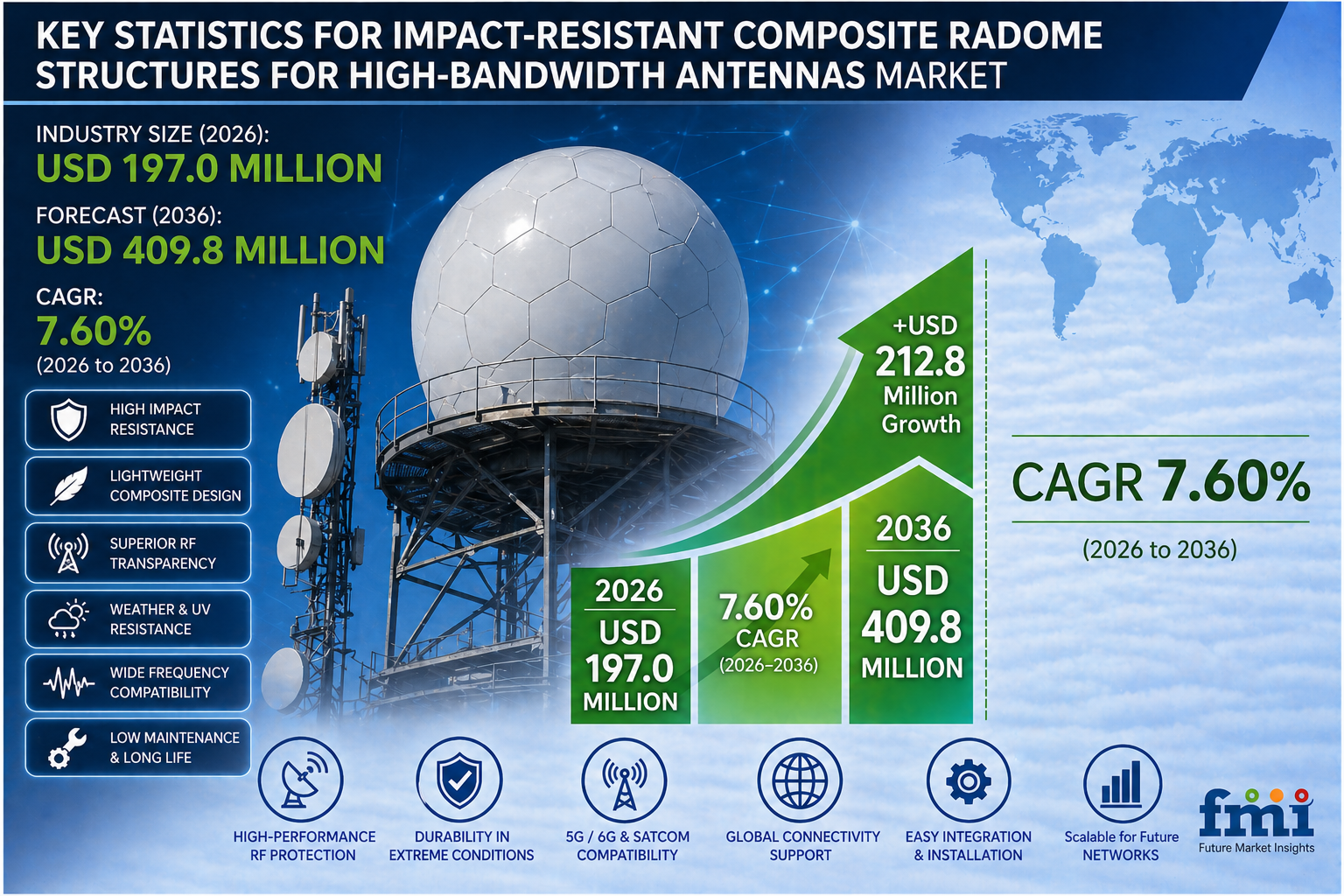
NEWARK, DE / ACCESS Newswire / April 27, 2026 / According to the latest analysis by Future Market Insights, the global impact-resistant composite radome structures for high-bandwidth antennas market is entering a steady growth phase as airlines intensify investments in inflight connectivity and satellite communication systems. Valued at USD 183.1 million in 2025, the market is projected to reach USD 197.0 million in 2026 and expand significantly to USD 409.8 million by 2036, registering a CAGR of 7.6% during the forecast period.
This growth reflects a strategic shift in aviation priorities, where high-speed onboard connectivity is becoming a core component of passenger experience and airline competitiveness. As Ka/Ku-band satellite systems gain traction, radome structures are evolving into high-performance composite solutions that must balance signal transparency, aerodynamic efficiency, and impact resistance.
Get detailed market forecasts, competitive benchmarking, and pricing trends:
https://www.futuremarketinsights.com/reports/sample/rep-gb-32648
Market Value Analysis: Connectivity Demand Drives Radome Innovation
Between 2026 and 2030, adoption of advanced radome structures is expected to accelerate as airlines integrate high-bandwidth satellite systems into both new and existing fleets.
Organizations are increasingly focusing on:
Deployment of high-transmissivity composite radomes for Ka/Ku-band systems
Integration of radome solutions into line-fit aircraft programs
Enhancing passenger connectivity with high-speed inflight internet
Reducing aerodynamic drag through low-profile radome designs
Standardizing radome configurations across fleet platforms
Failure to upgrade radome systems may result in reduced signal performance, lower connectivity quality, and diminished passenger experience in competitive airline markets.
From 2030 to 2036, growth will be driven by expanding satellite broadband adoption, increasing fleet modernization programs, and rising demand for premium inflight connectivity.
Technology Evolution: Advanced Composites and RF Transparency Drive Innovation
The evolution of radome structures is being shaped by advancements in composite materials, aerodynamic design, and RF performance optimization.
Key innovations include:
Quartz-based and hybrid composite laminates for improved signal transparency
Sandwich and honeycomb-core structures for impact resistance and weight reduction
Low-profile radome designs for reduced aerodynamic drag
Improved thermal management within composite structures
Enhanced bird-strike and environmental resistance capabilities
A key challenge remains achieving optimal balance between structural strength and RF transparency while meeting stringent aviation certification requirements.
An industry analyst notes:
"Radome structures are becoming critical enablers of next-generation inflight connectivity, where even minor signal losses can impact overall passenger experience and airline competitiveness."
Radome Structures Become Critical to Aircraft Connectivity Performance
As airlines compete on connectivity quality, radome systems are becoming essential components of aircraft communication architecture.
Core capabilities include:
High RF transparency for uninterrupted broadband connectivity
Impact resistance to meet aviation safety standards
Lightweight construction for improved fuel efficiency
Compatibility with advanced satellite antenna systems
Integration with aircraft design and aerodynamics
This transition is positioning radome structures as a strategic element in modern aircraft systems.
Speak to Analyst: Customize insights for your business strategy:
https://www.futuremarketinsights.com/customization-available/rep-gb-32648
Segment Spotlight
Commercial Aircraft Lead Platform Segment (52.0%)
Driven by large fleet sizes and increasing inflight connectivity demand.
Ka-Band Leads Frequency Segment (44.0%)
Supports high-speed satellite broadband and advanced connectivity systems.
Sandwich Composite Materials Lead (48.0%)
Balance strength, weight, and signal performance.
Mechanically Steered Antennas Lead (57.0%)
Remain dominant across existing fleet installations.
Line-Fit Installations Lead (54.0%)
Preferred by OEMs for streamlined certification and lifecycle management.
Regional Insights: Fleet Modernization and Connectivity Demand Drive Growth
The impact-resistant composite radome structures market is expanding globally, supported by fleet upgrades and rising passenger connectivity expectations.
Country
CAGR (2026-2036)
Key Growth Drivers
China
8.8%
Fleet expansion and domestic manufacturing growth
United States
8.3%
Strong retrofit and connectivity upgrade programs
United Arab Emirates
8.1%
Premium airline connectivity investments
Japan
7.6%
High standards for reliability and performance
France
7.4%
OEM integration and aircraft manufacturing base
United Kingdom
7.2%
Advanced satellite communication capabilities
Germany
7.0%
Precision engineering and aerospace innovation
Regional growth patterns reflect differences in fleet size, connectivity investment, and aerospace manufacturing capabilities.
Opportunities: Advanced Materials and Connectivity Expansion Unlock Growth
Key opportunities shaping the market include:
Development of low-profile, high-transparency composite radomes
Expansion of Ka-band and next-generation satellite systems
Integration of radomes into new aircraft production programs
Growth in retrofit demand for older aircraft fleets
Innovation in thermal management and structural durability
These opportunities are enabling suppliers to enhance product performance while aligning with evolving airline connectivity strategies.
Competitive Landscape: Certification and OEM Alignment Define Leadership
The market remains specialized and certification-driven, with competition centered on technical expertise and OEM integration.
Leading companies include:
Astronics Corporation
Communications & Power Industries
Honeywell Aerospace Technologies
ThinKom Solutions
Gogo
Safran Passenger Innovations
Airbus
Competitive differentiation is driven by:
Strong certification and regulatory compliance capabilities
Advanced composite material expertise
Proven RF performance and signal transparency
OEM partnerships and line-fit integration capabilities
Ability to support large-scale fleet deployment
Future Outlook: Radome Systems Become Core to Inflight Connectivity
Looking ahead to 2036, impact-resistant composite radome structures will play a critical role in enabling next-generation inflight connectivity and satellite communication systems.
Key trends include:
Increased adoption of high-frequency satellite communication systems
Shift toward low-drag, low-profile radome designs
Greater integration with advanced antenna technologies
Expansion of line-fit installations across new aircraft programs
Rising importance of connectivity in airline service differentiation
As airlines continue to prioritize passenger experience and operational efficiency, advanced radome structures will remain essential to delivering high-performance connectivity solutions.
Unlock 360° insights for strategic decision making and investment planning:
https://www.futuremarketinsights.com/checkout/32648
Browse More Technology Industry Reports:
Electronic Toll Collection Market - https://www.futuremarketinsights.com/reports/global-electronic-toll-collection-market
Unified Communication as a Service (UCaaS) Market - https://www.futuremarketinsights.com/reports/unified-communication-as-a-service-ucaas-market
Airborne Radar Market - https://www.futuremarketinsights.com/reports/airborne-radar-market
Wireless Charging Market - https://www.futuremarketinsights.com/reports/global-wireless-charging-market
Project Management Software Market - https://www.futuremarketinsights.com/reports/project-management-software-market
About Future Market Insights (FMI)
Future Market Insights (FMI) is a leading provider of market intelligence and consulting services, serving clients in over 150 countries. Headquartered in Delaware, USA, with a global delivery center in India and offices in the UK and UAE, FMI delivers actionable insights to businesses across industries including automotive, technology, consumer products, manufacturing, energy, and chemicals.
An ESOMAR-certified research organization, FMI provides custom and syndicated market reports and consulting services, supporting both Fortune 1,000 companies and SMEs. Its team of 300+ experienced analysts ensures credible, data-driven insights to help clients navigate global markets and identify growth opportunities.
For Press & Corporate Inquiries
Rahul Singh
AVP - Marketing and Growth Strategy
Future Market Insights, Inc.
+91 8600020075
For Sales - [email protected]
For Media - [email protected]
For web - https://www.futuremarketinsights.com/
SOURCE: Future Market Insights, Inc.