
EU Pea Fiber Market Outlook 2026-2036: Clean-Label Reformulation and Bakery Innovation Drive Steady Growth Across Spain, Italy, and Germany
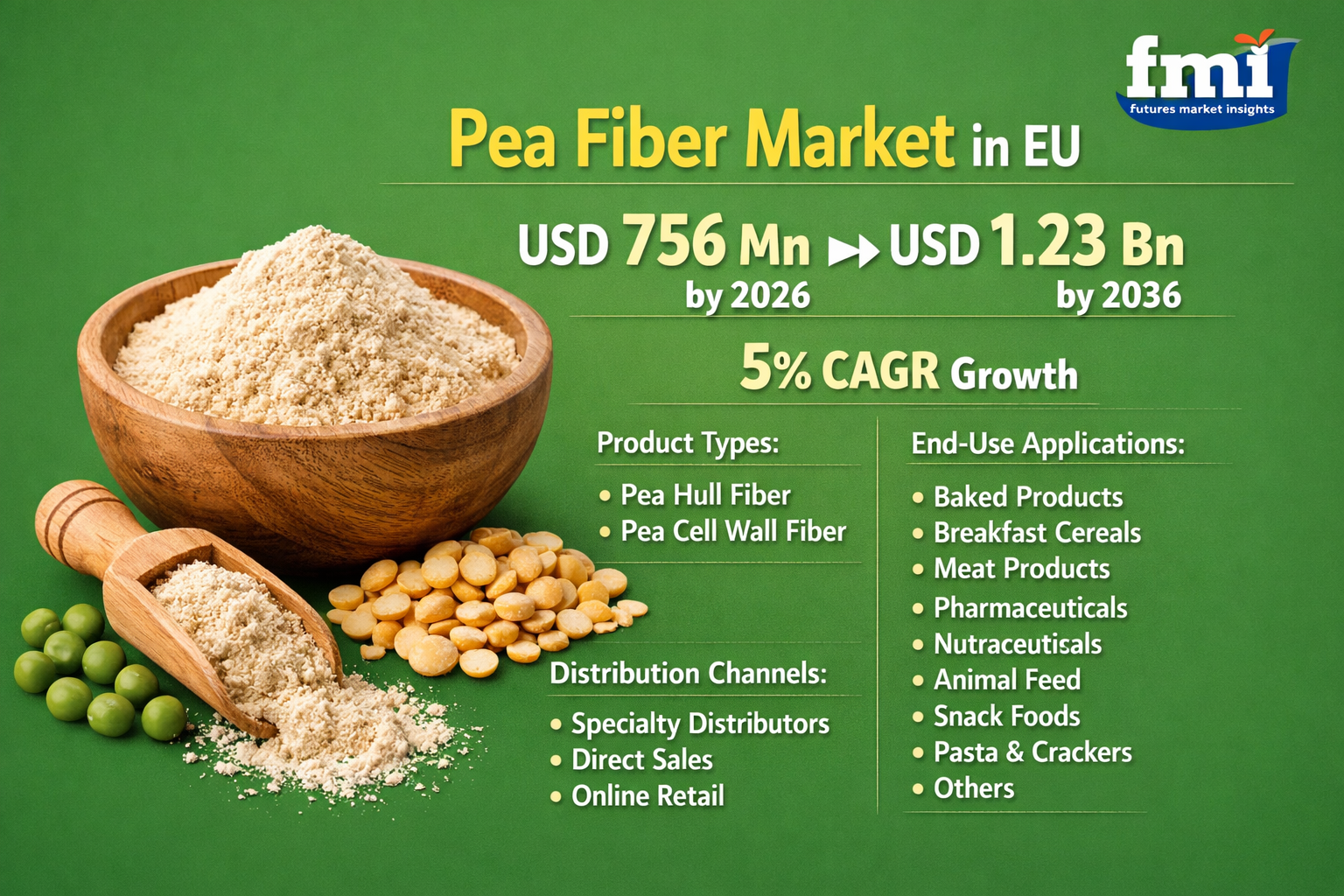 EU pea fiber demand grows steadily, driven by clean-label trends, bakery innovation, and rising preference for plant-based, allergen-free fiber ingredients.
NEWARK, DE / ACCESS Newswire / April 8, 2026 / The European pea fiber market is entering a stable expansion phase, driven by structural shifts in food manufacturing toward clean-label, plant-based, and allergen-free ingredients. According to the latest analysis, demand for pea fiber in the EU is valued at USD 756 million in 2026 and is projected to reach USD 1.23 billion by 2036, expanding at a CAGR of 5%. The market presents an incremental opportunity of USD 475.4 million, underpinned by sustained reformulation activity across bakery, snack, and alternative protein categories.
Request Your Sample Now - Unlock Growth Potential and Discover Key Market Opportunities! https://www.futuremarketinsights.com/reports/sample/rep-gb-27206
Market Overview and Growth Dynamics
Pea fiber, derived primarily from Pisum sativum processing, has emerged as a cost-effective and functional dietary fiber solution across European food manufacturing. Its strong alignment with clean-label regulations, allergen-free positioning, and functional performance in texture modification and water-binding applications continues to accelerate adoption.
The regulatory framework under EU food labeling laws and EFSA-backed health claims supporting digestive health and glycemic control further enhances the ingredient's commercial appeal. As food manufacturers intensify efforts to meet fiber intake targets and transparency requirements, pea hull fiber is increasingly replacing traditional fibers such as inulin and psyllium.
Key Demand Drivers
Clean-Label Reformulation: Manufacturers are prioritizing recognizable, plant-based ingredients, positioning pea fiber as a preferred solution.
Bakery and Snack Dominance: High demand from baked goods and extruded snacks due to moisture retention and texture enhancement.
Allergen-Free Advantage: Free-from gluten, soy, and dairy, offering a competitive edge in EU food production.
Health & Nutrition Trends: Rising consumer awareness of digestive health and fiber intake.
Cost Efficiency: Favorable pricing compared to alternative functional fibers.
Segment Analysis
By Product Type
Pea Hull Fiber dominates with 67.2% market share (2026)
Preferred for its high insoluble fiber content
Offers superior cost-performance balance and scalability
By End-Use
Baked Products lead with ~36% share
Bread (20%), cakes (10%), pastries (6.3%)
Other key applications:
Meat alternatives
Extruded snacks
Dairy alternatives
Nutraceuticals
By Form & Distribution
Available in powder and granulated formats
Distributed via:
Specialty ingredient suppliers
Direct B2B sales
Online ingredient marketplaces
Supply Chain Analysis (Who Supplies Whom)
The EU pea fiber value chain is vertically integrated and efficiency-driven:
Upstream:
Pea cultivation (France, Germany, Eastern Europe) → raw pea supply
Midstream Processing:
Fiber extraction during protein/starch separation by companies such as Roquette Freres, COSUCRA, and Emsland Group
Downstream Distribution:
Ingredient distributors and direct supply contracts → food manufacturers
End Users:
Bakery companies, snack producers, plant-based meat manufacturers, and nutraceutical brands
This integrated ecosystem ensures traceability, regulatory compliance, and consistent functional performance.
Pricing Trends and Cost Structure
Pea fiber pricing in the EU remains moderately stable, with key influencing factors:
Raw pea price volatility (weather and crop yield dependent)
Processing efficiency improvements lowering production costs
Competitive benchmarking against fibers like oat, chicory, and psyllium
Pea hull fiber maintains a cost advantage, making it attractive for large-scale bakery and snack manufacturers seeking margin optimization.
Regional Insights
Leading Markets by Volume
Germany (24% share): Strong food processing infrastructure
France (17%): Premium ingredient demand and clean-label focus
Italy (12%): Integration into bakery and pasta applications
High-Growth Markets
Spain (5.4% CAGR): Fastest growth driven by food processing modernization
Italy & Rest of Europe (5% CAGR): Expanding functional food adoption
France & Germany (4.6% CAGR): Mature but innovation-driven
BENELUX (4.3% CAGR): Premium and specialty ingredient focus
Competitive Landscape
The EU pea fiber market is moderately consolidated, with competition shaped by innovation, sustainability, and processing capabilities.
Key Players
Roquette Freres
COSUCRA
Emsland Group
Vestkorn Milling
CFF GmbH
Ingredion
Cargill
ADM
Agrana
Strategic Focus Areas
Expansion of EU processing facilities
Sustainable sourcing and circular economy initiatives
Functional enhancement and application-specific formulations
Direct partnerships with food manufacturers
Key Trends Shaping the Market
Clean-label and natural ingredient acceleration
Functional food innovation (digestive health, glycemic control)
Sustainability and circular processing models
R&D investments in fiber functionality and texture science
Digital B2B ingredient marketplaces improving procurement efficiency
Risks and Constraints
Volatility in pea crop yields and raw material costs
Competition from alternative fibers (oat, chicory root)
Regulatory complexity across EU member states
Variability in processing quality standards
Limited awareness among smaller food manufacturers
Investment Opportunities
Bakery reformulation solutions targeting high-fiber claims
Plant-based meat and dairy alternatives
Sustainable ingredient sourcing platforms
Premium nutraceutical fiber blends
Emerging Eastern European markets with untapped demand
For an in-depth analysis of evolving formulation trends and to access the complete strategic outlook for the Demand for Pea Fiber in EU through 2036, Full Report Request - https://www.futuremarketinsights.com/reports/demand-for-pea-fiber-in-eu
Future Outlook
The EU pea fiber market is expected to maintain steady, resilient growth through 2036, supported by regulatory alignment, health-driven consumption, and evolving food innovation strategies. While mature markets like Germany and France will anchor volume demand, Southern Europe-particularly Spain and Italy-will drive incremental growth momentum.
As food manufacturers continue to balance cost efficiency, functionality, and clean-label compliance, pea fiber is positioned as a core ingredient in next-generation food formulation across Europe.
Related Reports:
Pea Fiber Market: https://www.futuremarketinsights.com/reports/pea-fiber-market
Europe Chickpea Protein Market: https://www.futuremarketinsights.com/reports/europe-chickpea-protein-market
Western Europe Pea Protein Market: https://www.futuremarketinsights.com/reports/trends-growth-and-opportunity-analysis-of-pea-protein-in-western-europe
Demand for Textured Pea for High-protein Savory in EU: https://www.futuremarketinsights.com/reports/demand-for-textured-pea-for-high-protein-savory-in-eu
About Future Market Insights (FMI)
Future Market Insights (FMI) is a leading provider of market intelligence and consulting services, serving clients in over 150 countries. Headquartered in Delaware, USA, with a global delivery center in India and offices in the UK and UAE, FMI delivers actionable insights to businesses across industries including automotive, technology, consumer products, manufacturing, energy, and chemicals.
An ESOMAR-certified research organization, FMI provides custom and syndicated market reports and consulting services, supporting both Fortune 1,000 companies and SMEs. Its team of 300+ experienced analysts ensures credible, data-driven insights to help clients navigate global markets and identify growth opportunities.
For Press & Corporate Inquiries
Rahul Singh
AVP - Marketing and Growth Strategy
Future Market Insights, Inc.
+91 8600020075
For Sales - [email protected]
For Media - [email protected]
For web - https://www.futuremarketinsights.com/
SOURCE: Future Market Insights, Inc.